Wheeled Energy Deals in South Africa — 2026 Market Update
10 July 2026 · SOLINK
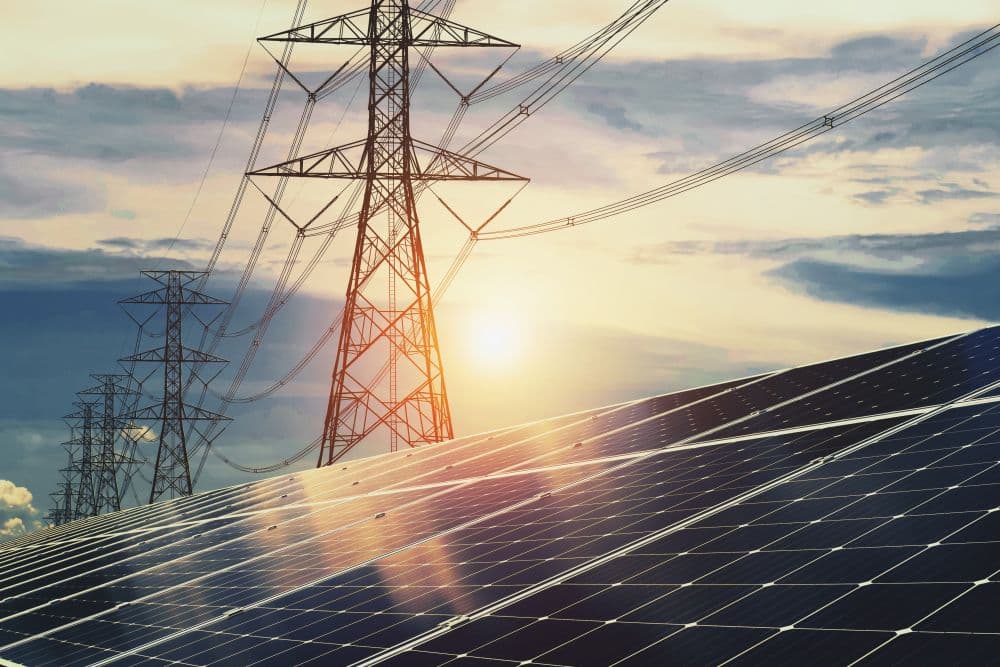
Wheeled energy — the practice of buying renewable electricity generated at one location and consumed at another, using the Eskom or municipal grid as the delivery mechanism — has moved decisively into the South African commercial and industrial mainstream. What was a niche structure in 2022 is now a standard procurement channel for large corporates. This is a snapshot of the 2026 wheeling market: who is active, what tariffs are landing at, what deal structures are working, and where the pitfalls remain.
How Wheeling Actually Works
In a wheeled deal, an Independent Power Producer (IPP) generates renewable electricity at a scale plant — typically a large solar farm, wind farm, or hybrid site — and sells that electricity to an offtaker whose site is somewhere else on the network. Eskom (or the relevant municipality) wheels the energy across the transmission and distribution grid, charging a wheeling fee. The offtaker's utility bill is credited for the wheeled kWh, and the offtaker pays the IPP under a long-term PPA.
Wheeling unlocks two things behind-the-meter solar cannot: significantly larger volumes than a single site can host, and access to higher-yield renewable resources (wind, high-irradiation solar farms in the Northern Cape) that are not co-located with the offtaker's operations.
The 2026 Market — Who Is Active
By early 2026, more than a dozen IPPs are actively offering wheeled deals to C&I offtakers. These range from established utility-scale players to newer specialist wheelers targeting mid-market offtake (10–100 GWh per annum). Aggregators are also emerging — bundling multiple offtakers into a single wheeled PPA to share transaction costs and IPP counterparty risk.
Typical Tariff Ranges
Wheeled PPA tariffs delivered to the offtaker's site (all-in, including generation, wheeling fees and losses) have compressed materially over the past 18 months. As of early 2026, indicative all-in tariffs are typically:
- Solar-only wheeled PPA: R1.15 – R1.45 per kWh (all-in delivered).
- Wind wheeled PPA: R1.20 – R1.55 per kWh, with better load-factor and evening profile.
- Hybrid solar + wind or solar + storage: R1.35 – R1.75 per kWh, with materially higher availability.
For context, most C&I Megaflex tariffs have moved through the R2.00–R2.60 per kWh range over the same period, giving wheeled deals a 30–50% delivered saving before any Section 12B or carbon considerations.
Deal Structures That Work
The most common 2026 structures are 10 to 20-year fixed-price PPAs with CPI-linked or partially utility-indexed escalation, minimum offtake obligations at 70–85% of contracted volume, and a Virtual PPA overlay where physical delivery certainty is limited. Corporate PPAs are increasingly stacking multiple offtakers under a single IPP to hit the volume threshold IPPs need for bankability.
The Traps to Avoid
- Wheeling losses: physical losses across the grid, typically 6–10%, are often quoted separately from tariff and can hide 10c/kWh of true cost.
- Curtailment risk: wheeled projects can be curtailed by the network operator; who bears that risk (IPP vs offtaker) is a critical clause.
- Municipal wheeling: many municipalities still have immature wheeling frameworks; delivery certainty and tariff stability vary widely.
- Bankability of the counterparty: not every IPP marketing a wheeled deal has actually built and financed one. Verification is essential.
Where SOLINK Fits
SOLINK runs independent wheeled-energy tenders on behalf of C&I offtakers — pre-qualifying IPPs, running competitive RFPs, evaluating tariff and non-tariff terms, and negotiating PPA and wheeling agreements from the client side. If wheeling is on your decarbonisation roadmap for 2026 or 2027, the market is finally deep enough to run a serious competitive process. Get in touch to explore what a wheeled deal would look like for your business.